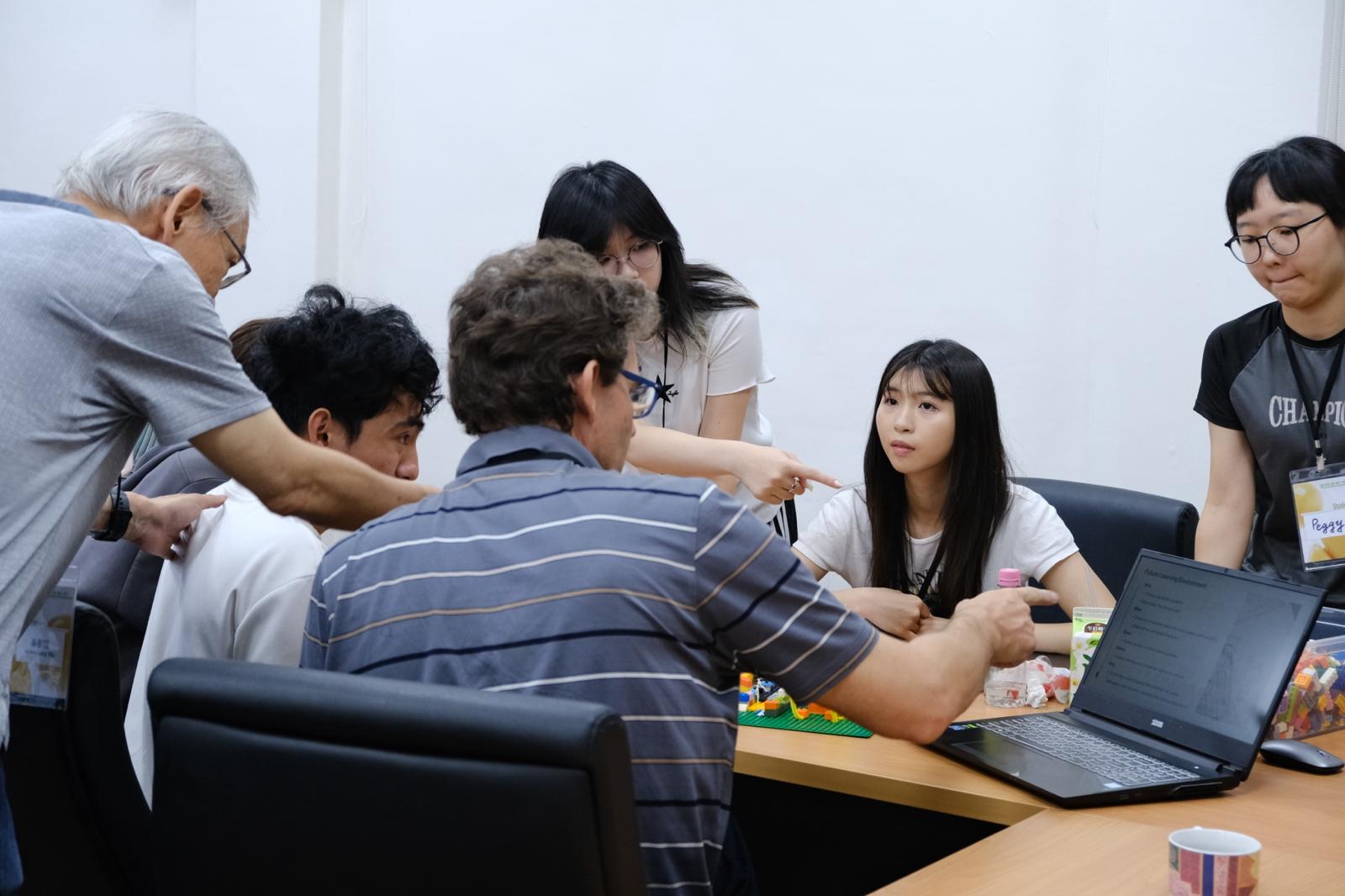
Prof. Dr. Wölfel began his stay in Taiwan with a visit to the National Taichung University of Science and Technology (NTCUST). There, he led a workshop entitled “From Insight to Immersion: Human-Centered Experience Design – Future Learning Environment.” The workshop focused on how insights from user-centered design research can be translated into interactive, spatial, and immersive learning scenarios to shape the learning environments of the future.
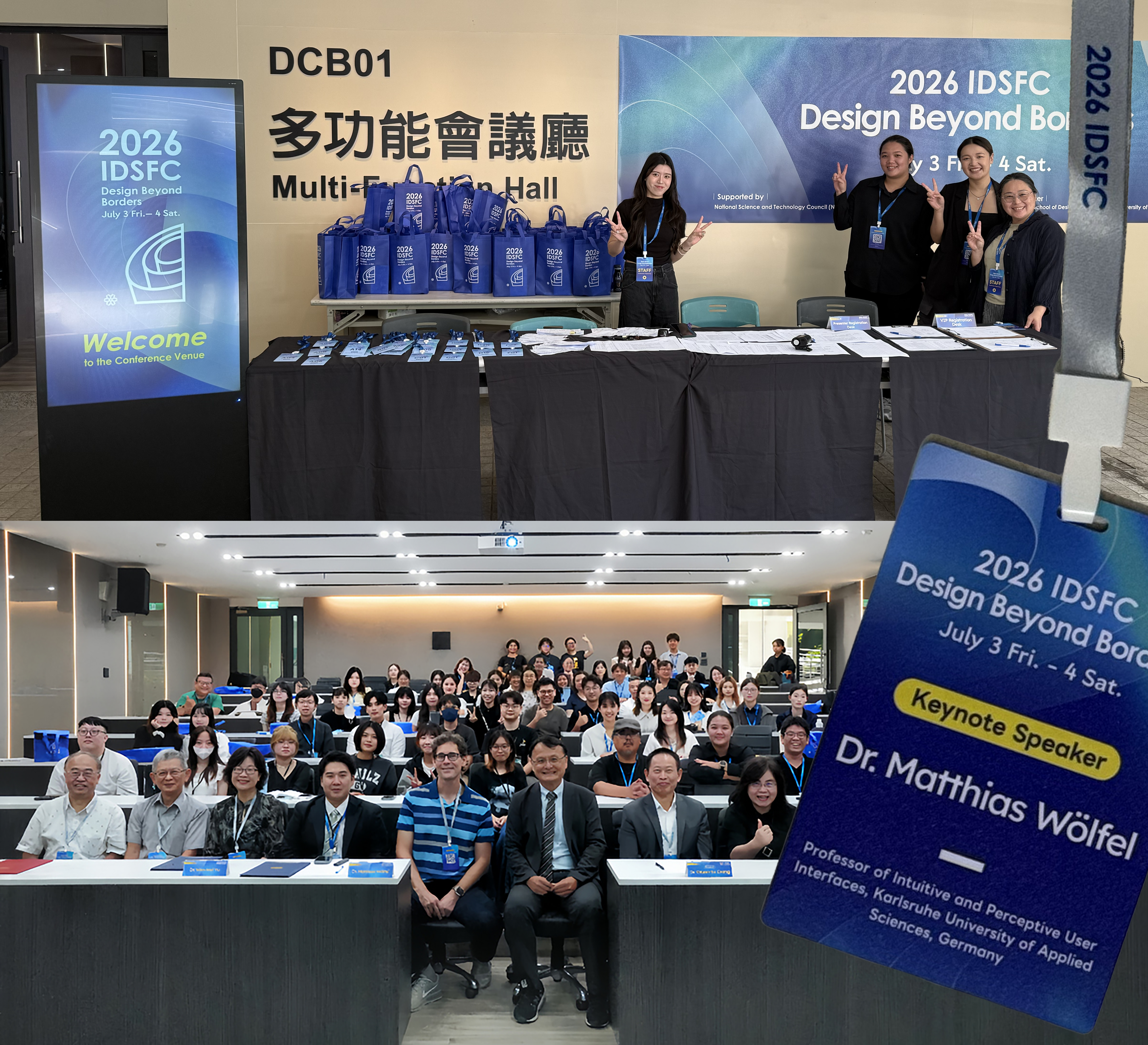
He then travelled to the 13th International Design Research Forum and Integrated Design Workshop (IDSFC) 2026 at the National Yunlin University of Science and Technology in Taiwan. This year’s conference, held under the theme “Design Beyond Borders,” provided an inspiring setting for professional, cultural, and interdisciplinary exchange. Prof. Dr. Wölfel was invited to deliver a keynote address. In his keynote, “Designing for Social Interactions: Bridging Realities in the Age of Ambient Intelligence,” he explored how adaptive, context-sensitive technologies can strengthen human connections rather than replace them. Drawing on his longstanding research in human–machine communication, immersive technologies, and intelligent interaction, he demonstrated how design can help ensure that technology enhances human connection rather than replacing it.
As part of the conference, he also led another international design workshop as a visiting scholar. His stay was characterized by the inspiring atmosphere of the conference, stimulating conversations with participants from around the world, and the impressive wide range of international contributions. Throughout his visit, Prof. Dr. Wölfel was also met with exceptional hospitality. Special thanks go to Wen-Huei Chou for the invitation, the warm welcome, and the generous support throughout the event, as well as to all organizers of IDSFC 2026 and the participants for the inspiring professional exchange.
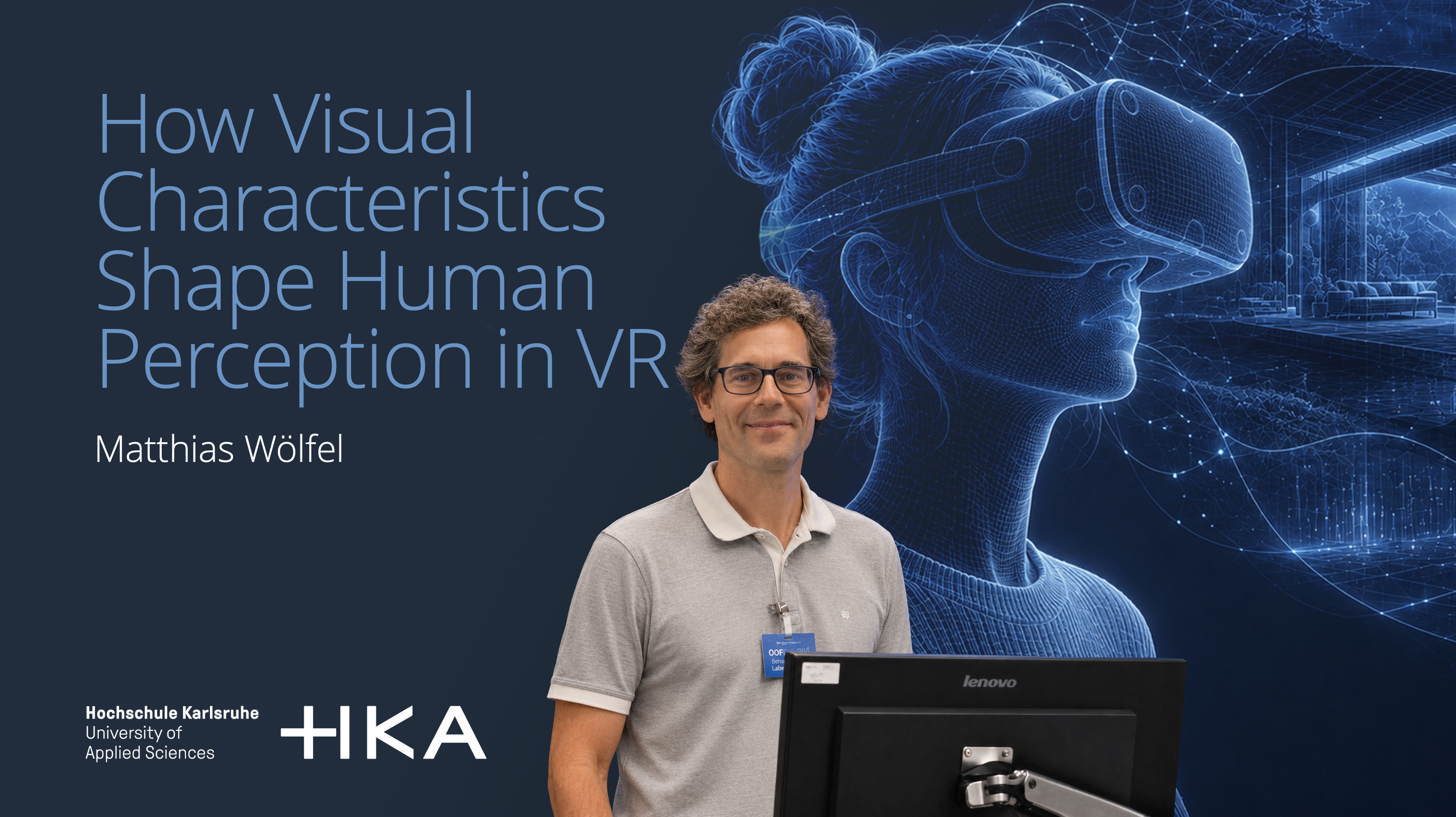
Just three weeks later, Prof. Dr. Wölfel was once again featured as a keynote speaker, this time at the International Conference on Virtual Reality (ICVR). In his presentation, he discussed how people perceive virtual environments through head-mounted displays compared with alternative display technologies, placing these findings in the broader context of immersive technologies. The presentation focused on how visual characteristics shape the experience of immersive virtual reality. He drew on recent empirical research examining the effects of avatar appearance and the “uncanny valley,” environmental lighting, and novel scene representations such as 3D Gaussian Splatting.